Networking Fridays
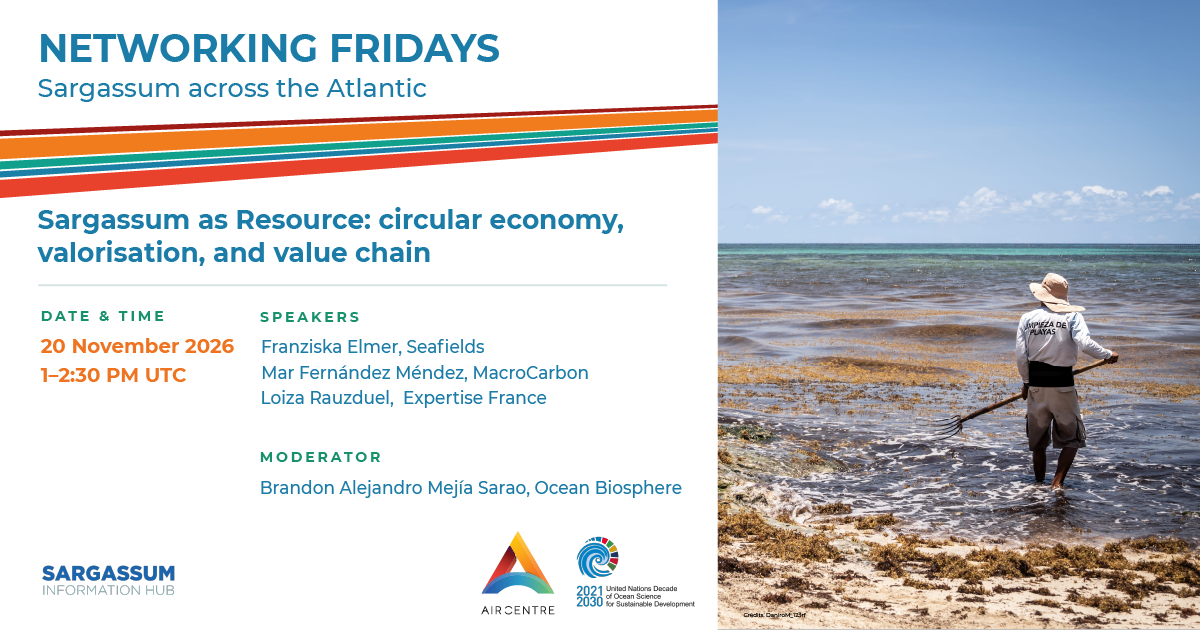
Sargassum as Resource: circular economy, valorisation, and value chains
Date
November 20, 2026, 1:00 PM - 2:30 PM UTC
AIR Centre Networking Fridays
More information about the Webinar series hereWatch the Recording
Watch on YouTube ↗Millions of tonnes of sargassum arrive on Caribbean and West African beaches each year with limited means of removal and essentially no coordinated plans for use. Yet sargassum biomass contains bioactive compounds, fibres, minerals, and fertilising potential that could support circular economy transitions in the very regions most burdened by its arrival. This session examines the practical and economic viability of sargassum valorisation -from collection and decontamination to biochar, cosmetics, and bioplastics- and asks what investment, regulation, and regional coordination would be needed to make value chains real.
Networking Fridays on Sargassum Across the Atlantic is a five-episode series recurring cross-Atlantic dialogue connecting researchers, environmental managers, health professionals, policymakers, entrepreneurs, and community representatives working on the sargassum crisis. Each session pairs regional practitioners dealing with sargassum on the ground with specialists whose expertise can directly inform local responses, building not just knowledge transfer, but lasting cross-Atlantic partnerships.
Programme · UTC
Moderators
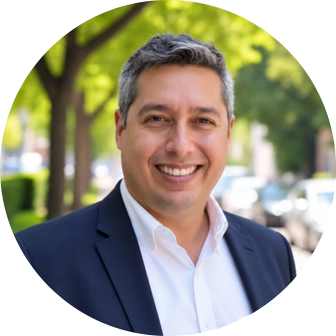
Brandon Alejandro Mejía Sarao
Ocean Biosphere
Brandon Alejandro Mejía Sarao is a biotechnology engineer. He also holds an MSc in Marine Biology from the National Autonomous University of Mexico (UNAM). He is currently Director of the Circular Economy at Ocean Biosphere, a company based in Quintana Roo (Mexico) that has been collecting and managing sargassum for Riviera Maya hotels since 2021. In his role, he establishes partnerships to develop technologies based on sargassum biomass and oversees the large-scale production of 'Ocean Gold' compost, made from a blend of 75% sargassum, sawdust, plant trimmings and microorganisms.
Speakers
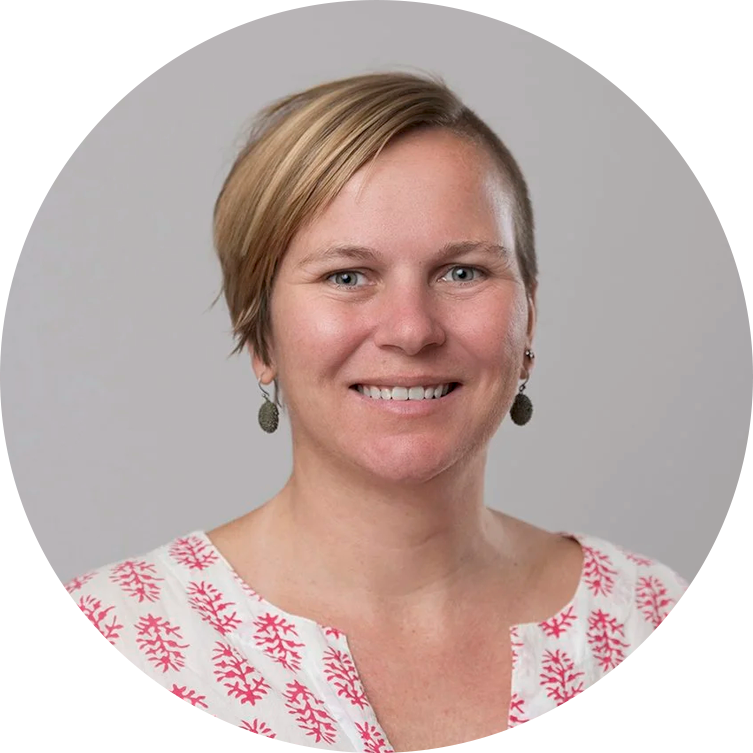
Franziska Elmer
Seafields
Dr. Franziska Elmer has a PhD in Marine Biology and is the Chief Scientific Officer at Seafields Solutions, a start up that is turning this nuisance algae into a reliable feedstock for valorization. She is also the founder and co-host of the Sargassum podcast, a research fellow at School for Field Studies, a kinship fellow and a TEDx speaker.
Loiza Rauzduel
Expertise France
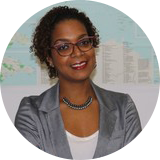
Loïza Rauzduel is the Sargassum Value Chain Manager under the SARSEA project. With a background in political science and international relations, she previously worked on biodiversity conservation, green economy, and climate change adaptation and resilience in the Caribbean island context, working out of Trinidad and Tobago and throughout the region.
SARSEA is a programme funded by the Agence française de développement - French Development Agency (AFD), and implemented by Expertise France, in collaboration with the Organisation of Eastern Caribbean States (OECS). Its main objective is to minimise and limit the impacts of sargassum strandings on local economies, communities and coastal ecosystems, working primarily with Saint Lucia, the Commonwealth of Dominica, Grenada and St Vincent and the Grenadines.
As Value Chain Manager, Loïza oversees the project’s component designed to support Caribbean islands states in the implementation of integrated sargassum management and valorisation operations, and contributes to the programme’s initiatives to move from fragmented responses toward stronger regional cooperation for integrated sargassum management.
Mar Fernández Méndez
MacroCarbon
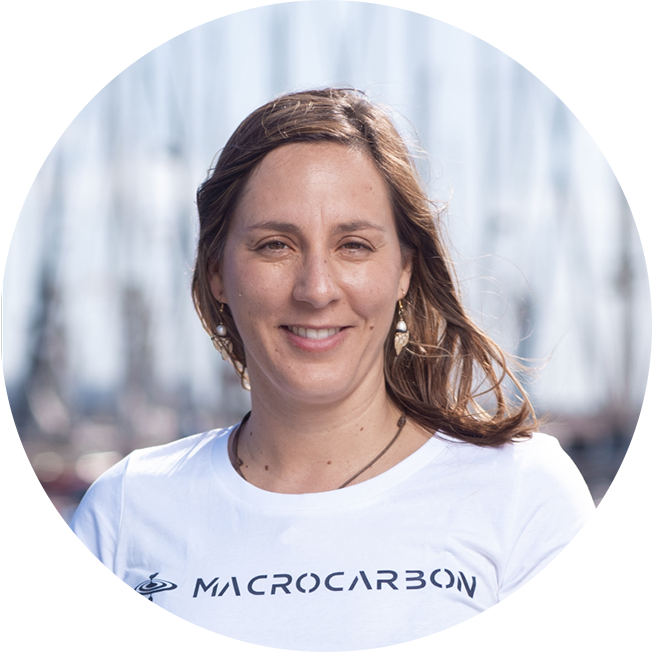
Dr. Mar Fernández Méndez is a Research Scientist at the Alfred Wegener Institute (AWI) and Co-Founder, Chief Executive and Scientific Officer of MacroCarbon, a Spanish start-up based in the Canary Islands. She holds an MSc in Marine Microbiology and a PhD in Biological Oceanography.
She has worked at the Norwegian Polar Institute and GEOMAR Helmholtz Centre for Ocean Research Kiel, and now leads a research group at AWI focused on marine climate change impacts and solutions. Her expertise spans phytoplankton ecology, marine carbon dioxide removal, artificial upwelling systems, and carbon and nutrient biochemistry.
In 2023, she co-founded MacroCarbon to cultivate floating seaweeds, such as pelagic Sargassum, in the open ocean and convert them into sustainable hydrocarbons, biochar, and carbon black for long-term carbon sequestration. She has participated in research expeditions from the Arctic to the Tropics.