The AIR Centre marks ten years since its establishment, reflecting on a decade dedicated to strengthening collaboration among countries on both sides of the Atlantic and advancing knowledge-based solutions for ocean sustainability.
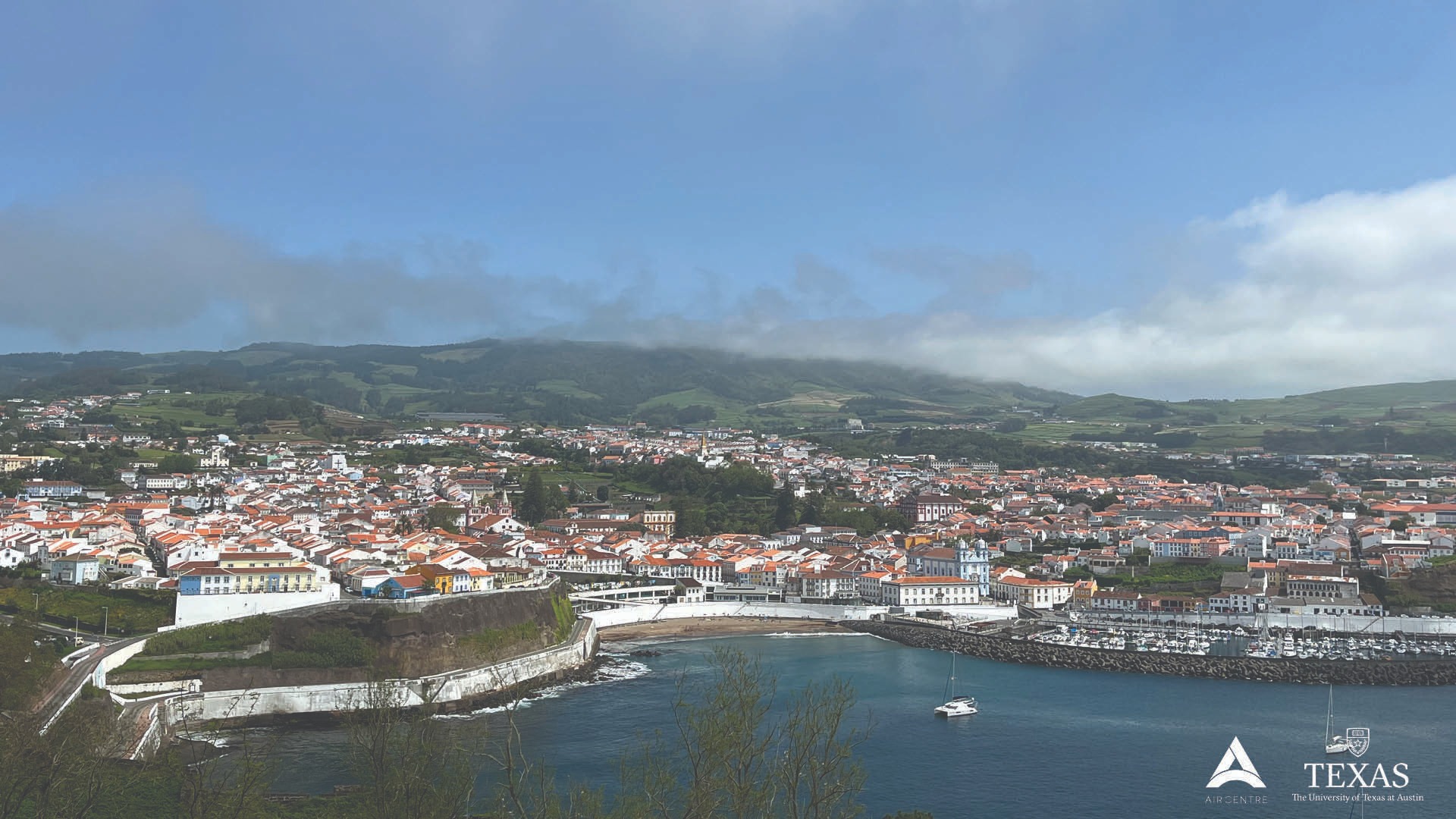
Operating from Terceira Island, in the Azores, and Lisbon, the AIR Centre today coordinates activities across six programme areas, spanning ocean policy, public health, Earth observation, data science and ocean forecasting.
In the field of ocean governance, the AIR Centre has become Portugal's national hub for the European Union Mission Restore Our Ocean and Waters by 2030 and serves as an observer to the OSPAR Commission, which oversees the protection of the North-East Atlantic. The AIR Centre is also involved in ten restoration projects supporting the mission's objectives.
One of its newest areas of work explores the links between ocean and human health. An agreement signed with Brazil's Fiocruz during the 2025 Luso-Brazilian Summit in Brasília established the foundation for a Blue One Health network, which has since expanded to include researchers from Nigeria and the University of Coimbra. Angola and Cabo Verde are expected to join the initiative in the near future.
The AIR Centre also hosts the secretariat of the Marine Biodiversity Observation Network (MBON), an international network dedicated to monitoring the state of marine biodiversity. Since 2025, MBON and the AIR Centre have jointly delivered training activities aimed at harmonising biodiversity data collection and sharing practices across countries and institutions.
In the area of data science, a machine-learning service launched in late 2024 with the support of more than 20 international partners, including ESA and NASA's Jet Propulsion Laboratory, now detects internal ocean waves worldwide. The service is expected to be expanded to the coasts of the Gulf of Guinea in 2027.
Satellite-based monitoring is also supporting efforts to address emerging marine ecosystem challenges. The AIR Centre tracks Sargassum blooms across the Atlantic as well as the invasive species Rugulopteryx okamurae, which has recently begun reaching Azorean shores, combining satellite imagery with in situ observations to improve monitoring and forecasting capabilities.
Closer to the ocean surface, the AIR Centre operates a pre-operational ocean forecasting system for the Azores, with a spatial resolution of two to three kilometres, and is developing a similar service for Cabo Verde in partnership with OKEANOS at the University of the Azores and IMar. These forecasting capabilities also power the Sea State mobile application, already being used in Angola and Nigeria.
Ten years after its creation, the AIR Centre continues to strengthen cooperation across the Atlantic, bringing together science, technology and policy to address shared ocean challenges and support a more sustainable and resilient future.
Learn more about these programmes through the factsheets below.

 Research