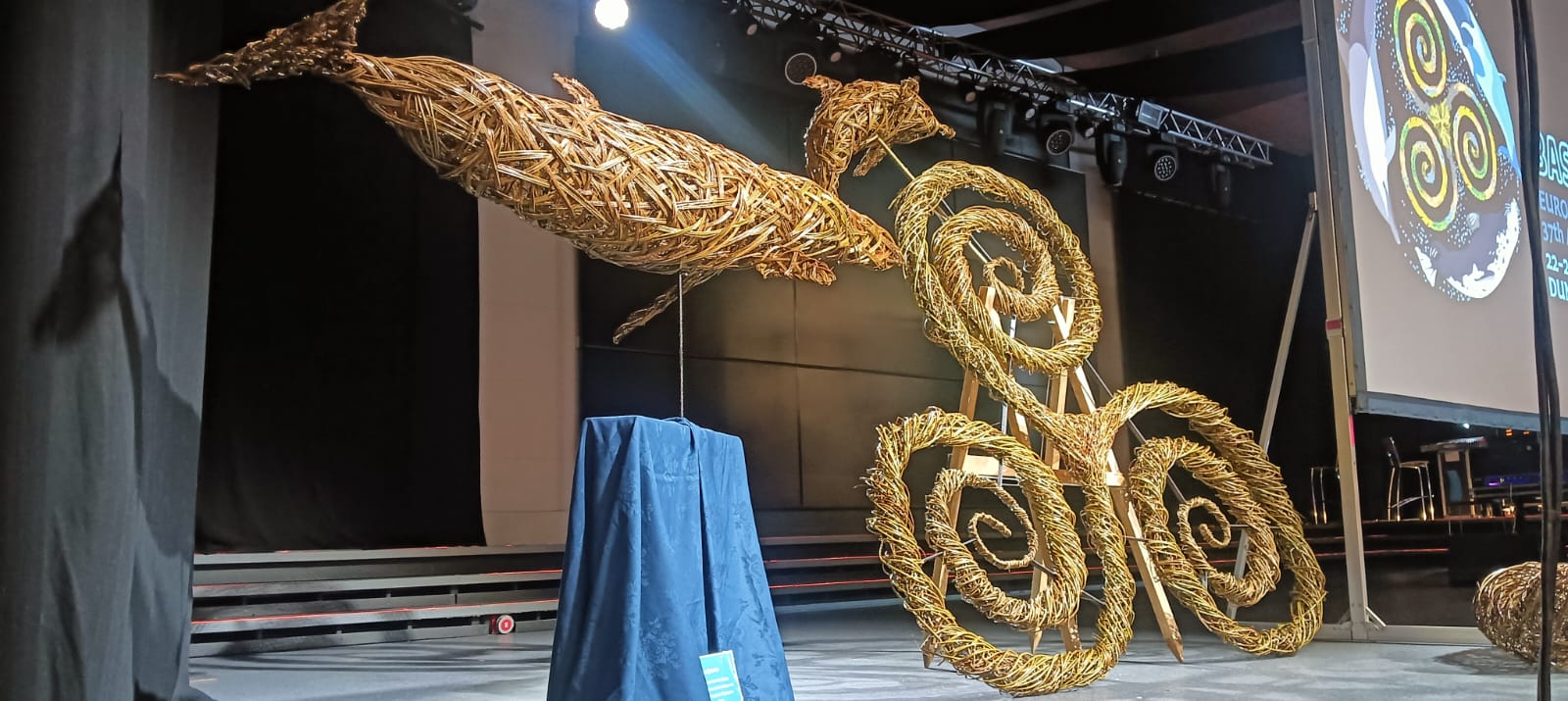
 This week, the AIR Centre participated in the European Cetacean Society (ECS) Annual Conference 2026, held from 22 to 24 April in Dundee, Scotland, one of the leading gatherings for cetacean research and conservation in Europe.
At the conference, Andrea Giusti, researcher from AIR Centre's Space Systems and Applications Programme, presented the poster "Detecting Whales from Space in Meter-Class Satellite Imagery to Enable Scalable Monitoring and Ship-Strike Mitigation." The presentation showcased the ongoing work on the use of satellite imagery and artificial intelligence to support whale detection and reduce ship-strike risk in key marine regions of the Azores and the Canary Islands.
This research is being developed within the Atlantic Whale Deal project, which aims to advance innovative technologies and foster transnational cooperation for whale protection. Bringing together science, technology, and end-user needs, the project focuses on improving whale detection capabilities, developing risk maps for ship-whale collisions, and supporting more effective marine conservation actions across the Atlantic.
The ECS Annual Conference provided a valuable platform to engage with the broader cetacean research community and contribute to the growing conversation around scalable, technology-driven approaches to marine biodiversity monitoring.
This week, the AIR Centre participated in the European Cetacean Society (ECS) Annual Conference 2026, held from 22 to 24 April in Dundee, Scotland, one of the leading gatherings for cetacean research and conservation in Europe.
At the conference, Andrea Giusti, researcher from AIR Centre's Space Systems and Applications Programme, presented the poster "Detecting Whales from Space in Meter-Class Satellite Imagery to Enable Scalable Monitoring and Ship-Strike Mitigation." The presentation showcased the ongoing work on the use of satellite imagery and artificial intelligence to support whale detection and reduce ship-strike risk in key marine regions of the Azores and the Canary Islands.
This research is being developed within the Atlantic Whale Deal project, which aims to advance innovative technologies and foster transnational cooperation for whale protection. Bringing together science, technology, and end-user needs, the project focuses on improving whale detection capabilities, developing risk maps for ship-whale collisions, and supporting more effective marine conservation actions across the Atlantic.
The ECS Annual Conference provided a valuable platform to engage with the broader cetacean research community and contribute to the growing conversation around scalable, technology-driven approaches to marine biodiversity monitoring.
 Collaboration
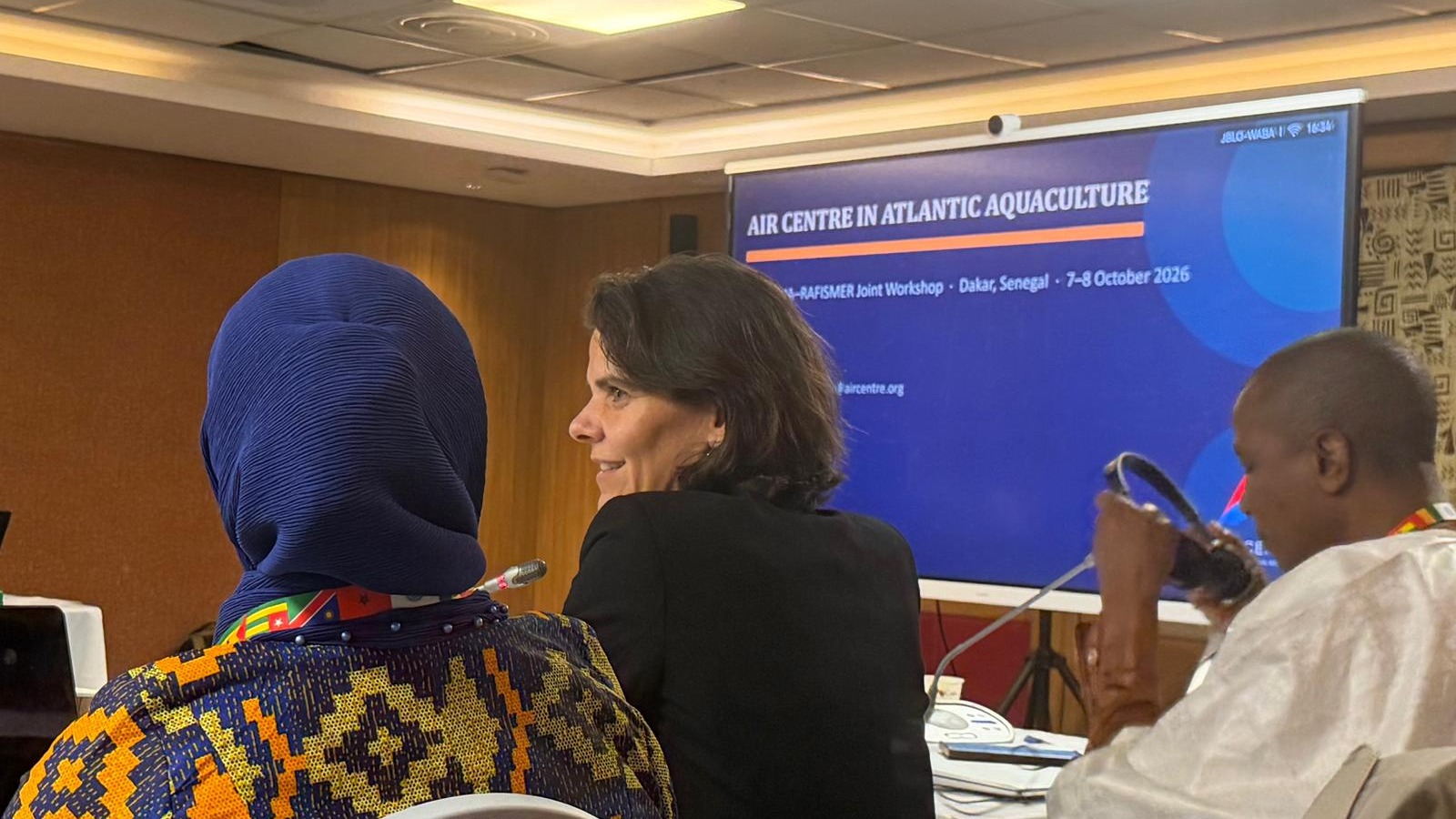
Atlantic stakeholders gather in Dakar to advance sustainable aquaculture development
calendar_today October 7, 2026
The AIR Centre is taking part in the RAFAQUA meeting, taking place on 7 and 8 October in Dakar, Senegal, alongside the Salon International de l'Aquaculture de Dakar (SIAq 2026). The event brings together public authorities responsible for aquaculture and fisheries research institutions from across the Atlantic African region to discuss the sustainable development of the sector.