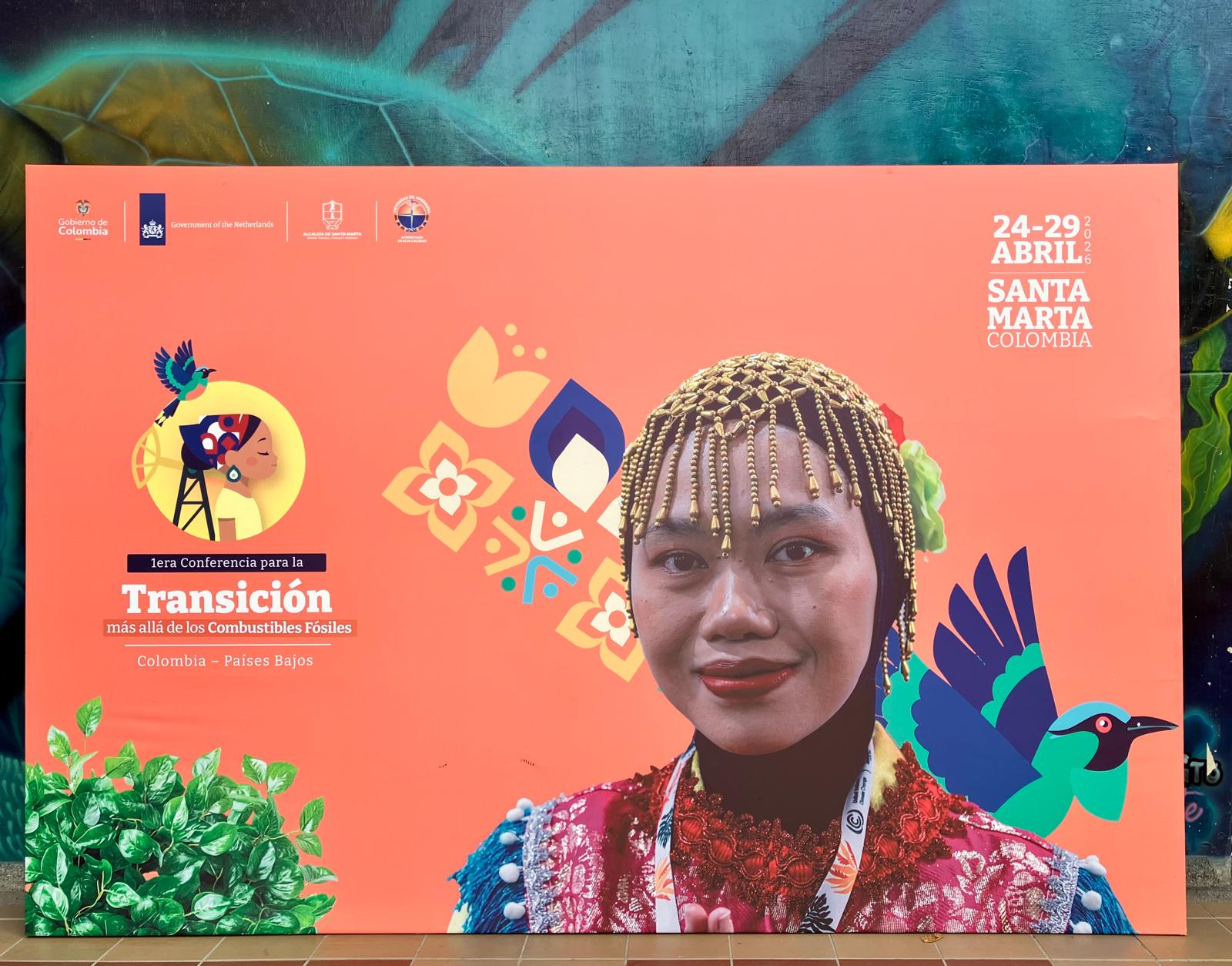
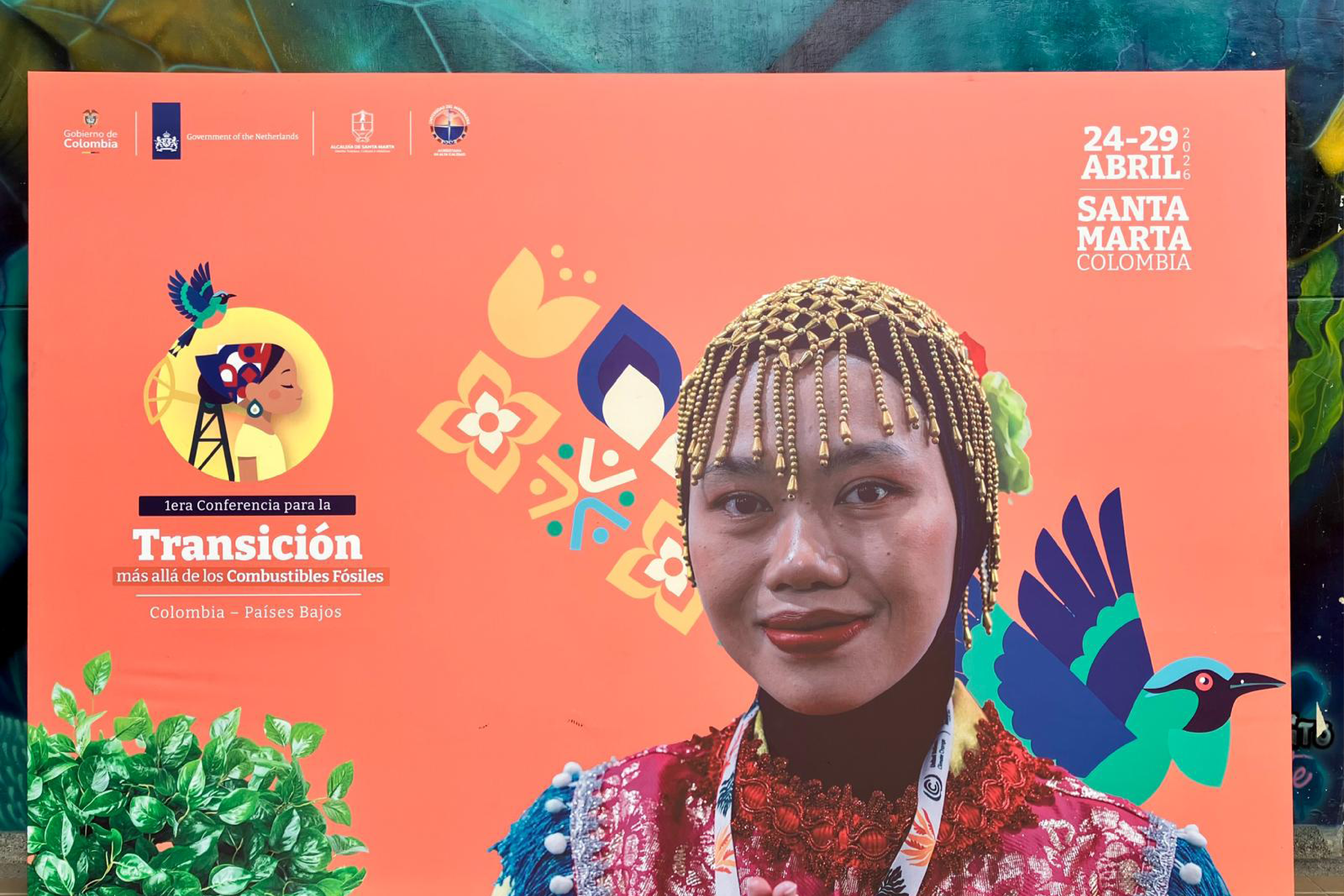
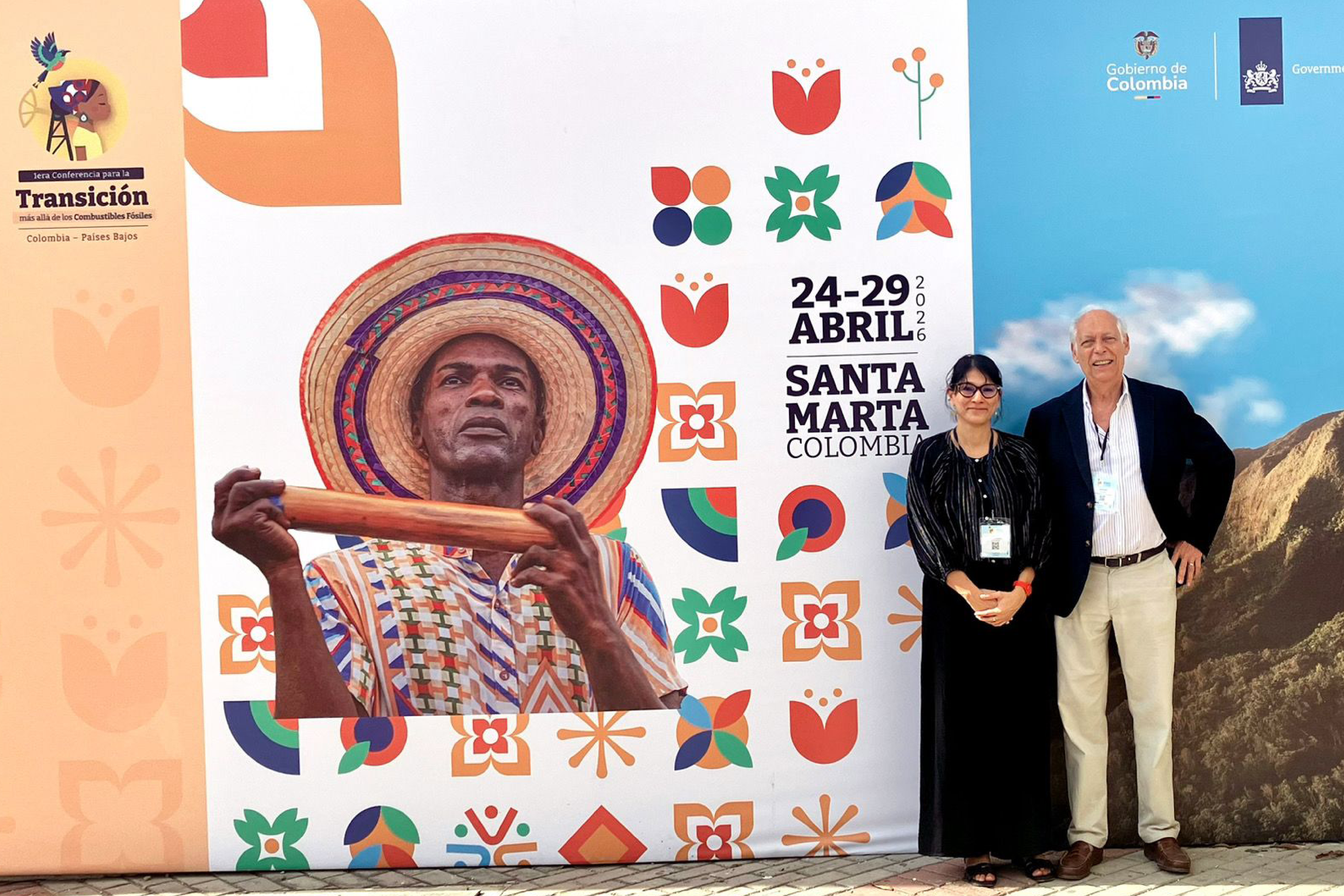
The First Conference on Transitioning Away from Fossil Fuels (April 24–29, 2026), held in Santa Marta, Colombia, brought together an international group of scientists, policymakers, civil society organisations, and Indigenous leaders to address one of the most pressing challenges of our time. The AIR Centre participated in this landmark event, represented by Prof. António Vallêra, from the University of Lisbon, and Natalia Ospina-Alvarez, Head of the AIR Centre’s Biodiversity and Blue Economy Programme. Their participation built on the groundwork laid during a
preparatory meeting held on 27 March at the AIR Centre’s Lisbon office, organised in collaboration with the Colombian Embassy in Portugal, which brought together Portuguese experts in support of the global energy transition.
On April 24 and 25, Prof. Vallêra and Natalia Ospina-Alvarez took part in the Academic Dialogues, the scientific component of the Conference, led by the University of Magdalena and the Live It In The Ground Initiative (LINGO). This in-person meeting brought together researchers and experts to consolidate and refine proposals emerging from written contributions submitted ahead of the event, prioritise key enabling pathways for the energy transition, and identify sectoral spokespersons for the Conference’s high-level segment.
Discussions were structured around the three pillars of the Conference: Overcoming Economic Dependency; Transforming Supply and Demand; and Promoting International Cooperation and Multilateralism. Other thematic focuses included the epistemologies of the Global South, the scientific panel on the global energy transition, and health. The sessions resulted in consolidated position papers by sector, reflecting collectively developed priorities and recommendations to feed into the broader Conference process.
The Academic Dialogues brought together a distinguished group of participants, including ministers from the Colombian Government; Ati Gúndiwa, a leader of the Arhuaca community, economist, and defender of the Sierra Nevada de Santa Marta in Colombia; Pablo Vera, Rector of the University of Magdalena; and other prominent voices from across the Global South and beyond.
On 26 April, Natalia Ospina-Alvarez represented the AIR Centre at the Peoples’ Pre-Assembly, an official component of the Conference designed for civil society organisations and stakeholders outside the Climate Action Network (CAN). The Pre-Assembly provided a structured space for discussions on key enablers and solutions for implementing the energy transition, organised around the same three thematic pillars. All contributions were documented by the co-hosts as part of the official Conference report.
The conference has brought together representatives from 56 countries. Delegations from all continents were in attendance, with over 1.000 representatives from organisations. These include at least 500 community, people and social sector representatives, 30 parliamentarians, over 400 academics, and, for the first time, 10 subnational governments.
A key highlight of the conference is the creation of the Scientific Panel for the Global Energy Transition (SPGET), launched officially on the 24 of April. The panel will be chaired by Vera Songwe, co-chair of the High Level Expert Panel on Climate Finance (Cameroon), Ottmar Edenhofer, director and chief economist of the Potsdam Institute for Climate Impact Research (Germany), and Gilberto M. Jannuzzi, professor of energy systems at Universidade Estadual de Campinas (Brazil).
The AIR Centre’s participation in this Conference reflects its broader commitment to the global conversation on sustainability, energy, and ocean–climate interactions. It also highlights its role in bringing transatlantic scientific expertise to international processes and in connecting researchers, institutions, and communities across the Atlantic in the shared pursuit of a transition beyond fossil fuels.
The
Santa Marta Action Repertoire (SMART) Report, which includes the preliminary scientific insights from the Synthesis Report work-streams of the Santa Marta Academic Dialogue (24-25 April, 2026), has been released and is available
here.
 Collaboration