
Traducción automática: Este texto ha sido traducido automáticamente y puede contener imprecisiones. En caso de duda, consulte la versión en inglés.
New Study Reveals How Temperature Impacts Leatherback Sea Turtle Hatchlings

New Study Reveals How Temperature Impacts Leatherback Sea Turtle Hatchlings

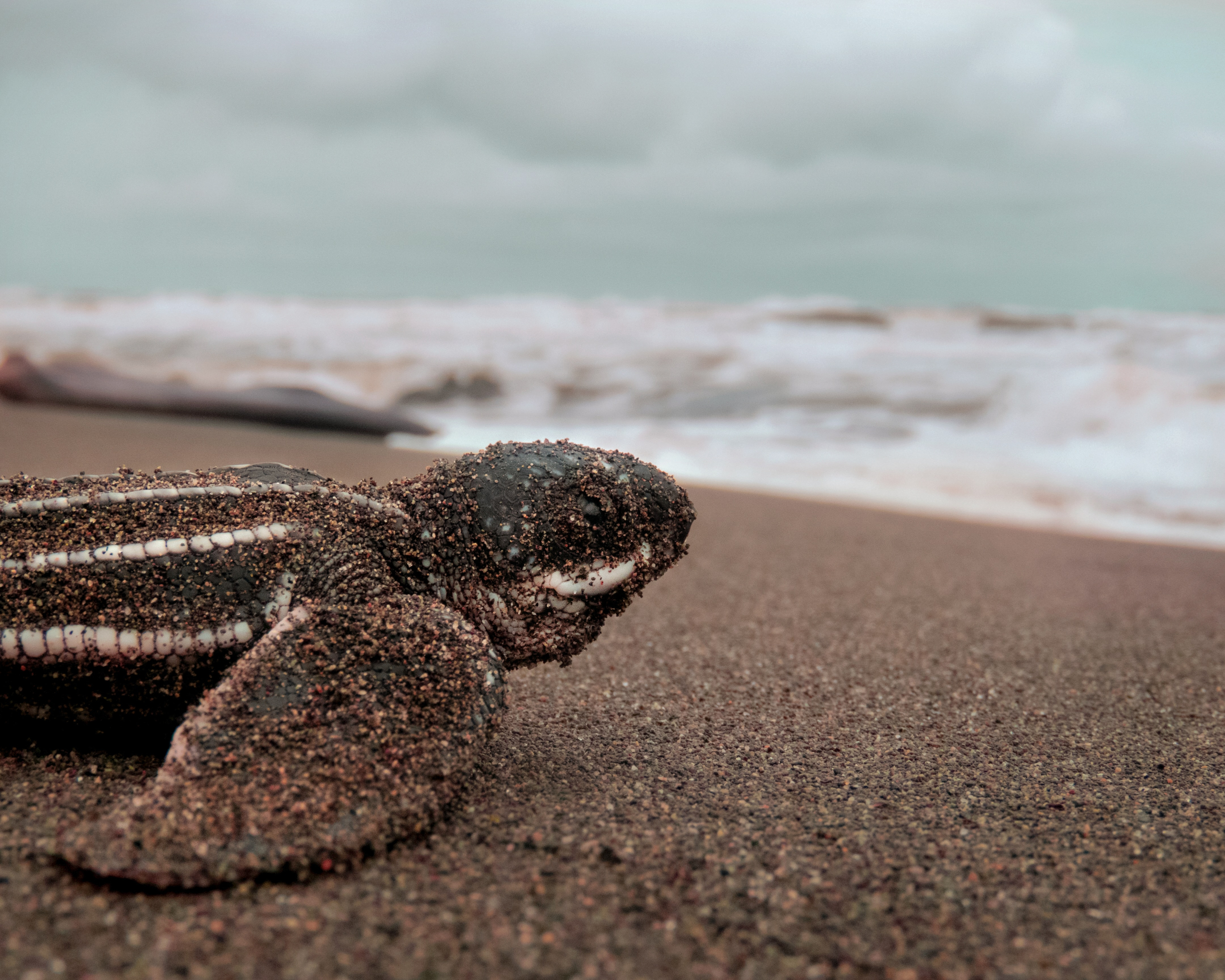
In a ground-breaking study, researchers from Florida Atlantic University have unveiled the significant influence of temperature on the reproductive success of leatherback sea turtles, indicating how climate change is a major threat for this particular species and highlighting the urgent need for conservation efforts to protect these vulnerable creatures in the face of climate change. Nest temperature was found to play a pivotal role in determining the physical characteristics of hatchlings, like body length and depth, as well as flipper length. Higher temperatures in the nest produced hatchlings with thicker body depths and shorter flippers, which struggled to right themselves when placed on their backs. Researchers observed that hatching and emergence success correlated with temperature as mid-season nests experienced the highest success rates, with hotter nests leading to shorter incubation periods and reduced yolk mass conversion to body tissue growth. Surprisingly, the study found no significant correlation between incubation temperature and crawling speed. Compared to loggerhead and green sea turtles, leatherback turtle nests, in the study, exhibited lower hatching success, underscoring the species' vulnerability to environmental conditions. This research highlighted the looming threat of climate change to this species calling attention to the urgent need for effective conservation efforts to protect them. Published in the journal Endangered Species Research, the study monitored 13 leatherback turtle nests along the coastline in Juno Beach, Florida, spanning various nesting seasons. The scientists explored the relationship between nest incubation temperatures and crucial aspects of hatchling development and success. Study co-author is Heather A. Seaman, an FAU graduate student pursuing her Ph.D., under Milton's direction in the Department of Biological Sciences. Via Science Daily (https://www.sciencedaily.com/releases/2023/09/230907105911.htm)
Share this entry

Other News

Event

La Cumbre Científica Portuguesa «Innovación 2026» moviliza a la comunidad investigadora de Portugal en torno a las prioridades futuras

calendar_today July 17, 2026

El Centro AIR participó en la Cumbre Científica Portuguesa «Innovación 2026», celebrada los días 15 y 16 de julio en el Centro de Convenciones de Lisboa, que supuso el primer gran evento organizado por la recién creada Agencia de Investigación e Innovación de Portugal (AI²).

Innovation

Brasil y Portugal refuerzan su cooperación con la inauguración de la oficina de la Fiocruz en Lisboa

calendar_today July 16, 2026

El 15 de julio de 2026, el Centro AIR participó en la visita oficial del ministro de Sanidad de Brasil, Alexandre Padilha, con motivo de la inauguración oficial de la oficina de la Fundação Oswaldo Cruz (Fiocruz) en Lisboa. La nueva oficina está situada en el mismo edificio que alberga también a ApexBrasil, Embratur y Sebrae, lo que refuerza la presencia institucional de Brasil en Portugal y amplía las oportunidades de cooperación bilateral.

Collaboration

Meeting with the Hon Consul‑General of the Kingdom of Tonga strengthens dialogue on ocean science and climate cooperation

calendar_today July 9, 2026

On 2 July, the AIR Centre hosted a meeting at its Lisbon office with the Comendador Anthony Bailey, Honourable Consul-General of His Majesty The King of Tonga to the Portuguese Republic. The discussion brought together AIR Centre Executive Director Miguel Miranda, Deputy Executive Director Mafalda Carapuço, and researcher Ana Faria, marking the beginning of a promising dialogue between the two nations.