The second LabPlas field campaign in the North Sea took place between the 26th June and 1st of July of 2023. Samples between Elbe’s (Germany) and Thames’s (UK) rivers were taken for analysis of nano and microplastics and their toxicology effects and impacts on biota (Figure 1). Before and during the cruise the AIR Centre examined satellite data to support the campaign, validate satellite algorithms, and detect relevant features in the cruise’s track, such as plastic debris accumulations and phytoplankton blooms.
Figure 1: LabPlas Field Campaign Locations in the North Sea, Elbe and Thames rivers.
Weeks before the cruise, examination of ESA’s Sentinel-2 satellite images started to hint for a major phytoplankton bloom in the region. Then, just a few days before the cruise, a clear Sentinel-2 image on the 24th of June 2023 (Figure 2) revealed that the bloom was still present. In the satellite image we could see golden curved filaments, that suggested for a bloom of
Noctiluca scintillans.
Noctiluca scintillans is one of the most common “red tide” forming organisms. It typically blooms from spring to summer, and in extreme blooms, it can lead to viscous red-brown waters, the so-called “red tides”, which seemed to be the case occurring in the region. Although
Noctiluca scintillans itself is not toxic, it is classified as a Harmful Algae Bloom (HAB) species as it can cause death of fish and marine invertebrate through oxygen depletion, gill clogging or high levels of ammonia generation.
Figure 2: ESA’s Sentinel-2 satellite image on the 24th of June 2023, indicating a coccolithophore bloom (milky-blue bright water) and a Noctiluca scintillans bloom (golden filaments).
Our suspicions of a red-tide caused by
Noctiluca scintillans revealed true in the morning of the 30
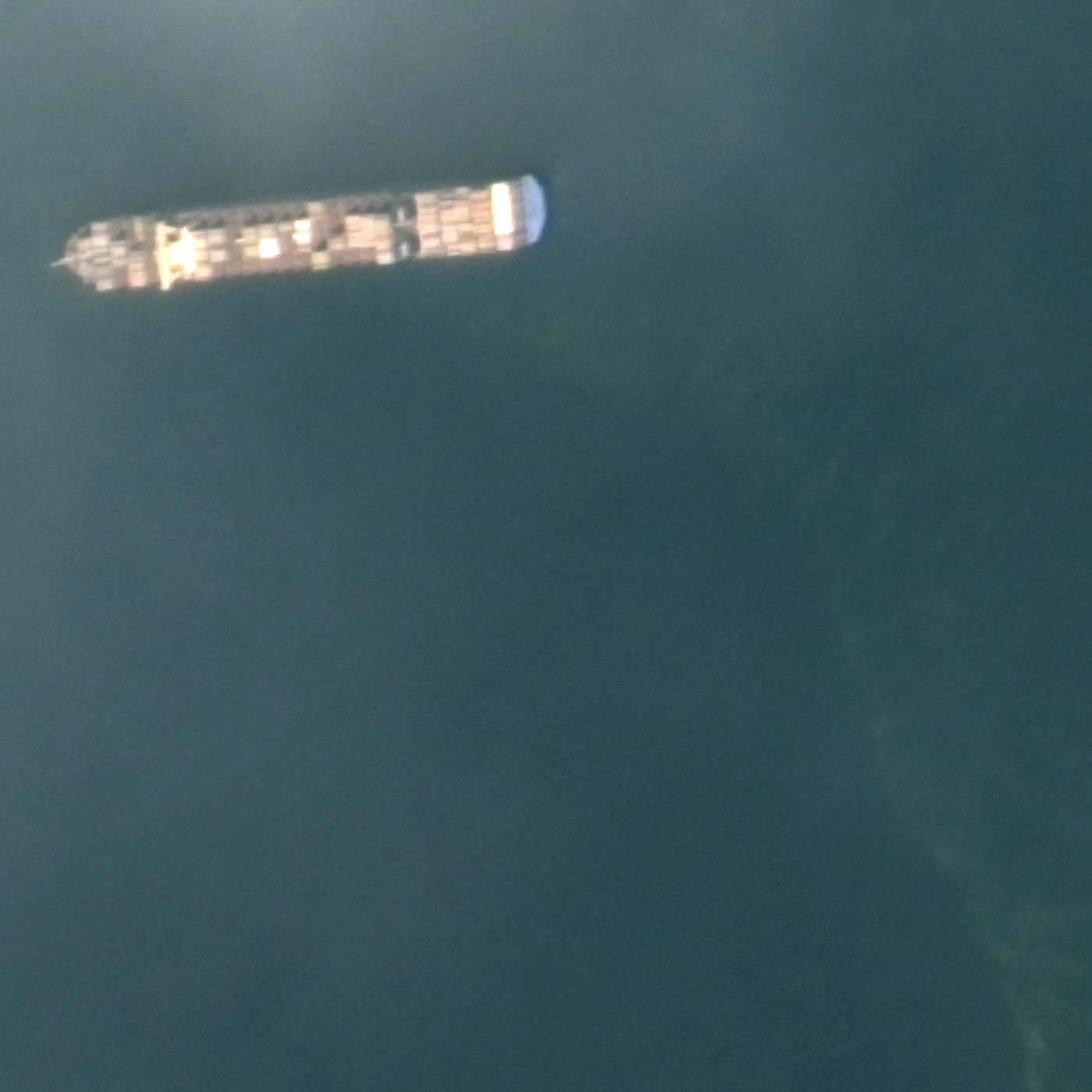
th June when the LabPlas crew was contemplated with a spectacular event, as extensive filaments of viscous brownish water spread until the eye can see (Figures 3a and 3b). The bloom was also visible in other satellite data, such as the GEOSAT-2 pansharpened very-high resolution (0.75 m) satellite image (Figure 4).
Figure 3a: Photographs taken by LabPlas team showing the Noctiluca scintillans bloom
Figure 3b: Photographs taken by LabPlas team showing the Noctiluca scintillans bloom
The combination of satellite data and ground-based observations demonstrates the benefits of using satellite technology to monitor extensive areas of the ocean and allowed to identify and spatially characterize a major biological event that otherwise would be overlooked. This contributes to a better knowledge of the biogeochemical processes in the North Sea. Furthermore, it offers key information to better discriminate between phytoplankton blooms and other features in satellite images, such as plastic debris accumulations, which is a main focus of the AIR Centre team in the Smart Hubs work package.
Figure 4: GEOSAT-2 satellite image on the 30th of June 2023, showing the Noctiluca scintillans bloom (golden filaments).

 Collaboration