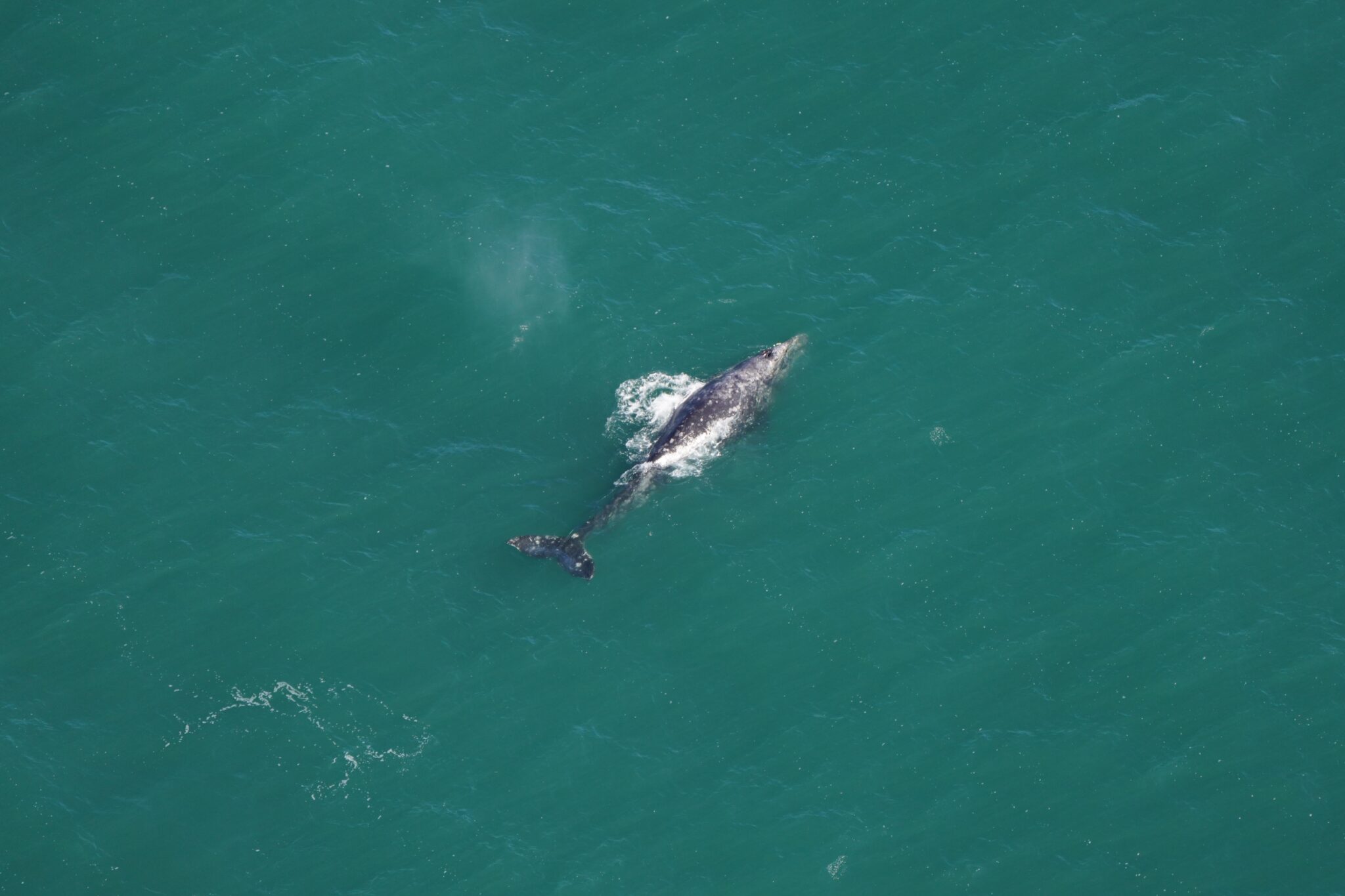
On the first day of March, a grey whale was spotted by scientists, off the coast of New England, marking a significant event as the species is believed to have been extinct in the Atlantic Ocean for over two centuries.
On March first, while conducting aerial surveys, researchers from the New England Aquarium observed the lone whale approximately 30 miles south of Nantucket, Massachusetts. The animal's behaviour, including repeated diving and resurfacing, suggested it was feeding, allowing the rare encounter to be photographed. Confirmation of the species came after a thorough review of the images back at the New England Aquarium. It is speculated that this sighting may be linked to a previous observation off the coast of Florida back in December 2023, suggesting the possibility of the same individual making an extraordinary journey across vast oceanic distances.
The grey whale (
Eschrichtius robustus) is renowned for its mottled grey body and massive size, with females reaching up to 15 meters long and weighing approximately 41,000 kgs. While a common sight in the Pacific Ocean, their presence in Atlantic waters has been exceedingly rare, having disappeared during the 18
th century, with only a handful of sightings in the past 15 years. Scientists speculate that climate change might play a role in this unusual behaviour. The melting of Arctic Sea ice, particularly in the Northwest Passage, has opened new routes for marine mammals, including grey whales, to navigate between the Pacific and Atlantic Oceans during the summer months.
The sighting of the grey whale off the New England coast serves as a poignant reminder of the complex interplay between environmental shifts and the behaviour of marine species. As scientists continue to unravel the mysteries of these magnificent creatures, it underscores the urgent need for concerted global efforts to address the underlying drivers of climate change and safeguard the future of our oceans.
Source:
LiveScience
New England Aquarium

 Collaboration