Networking Fridays
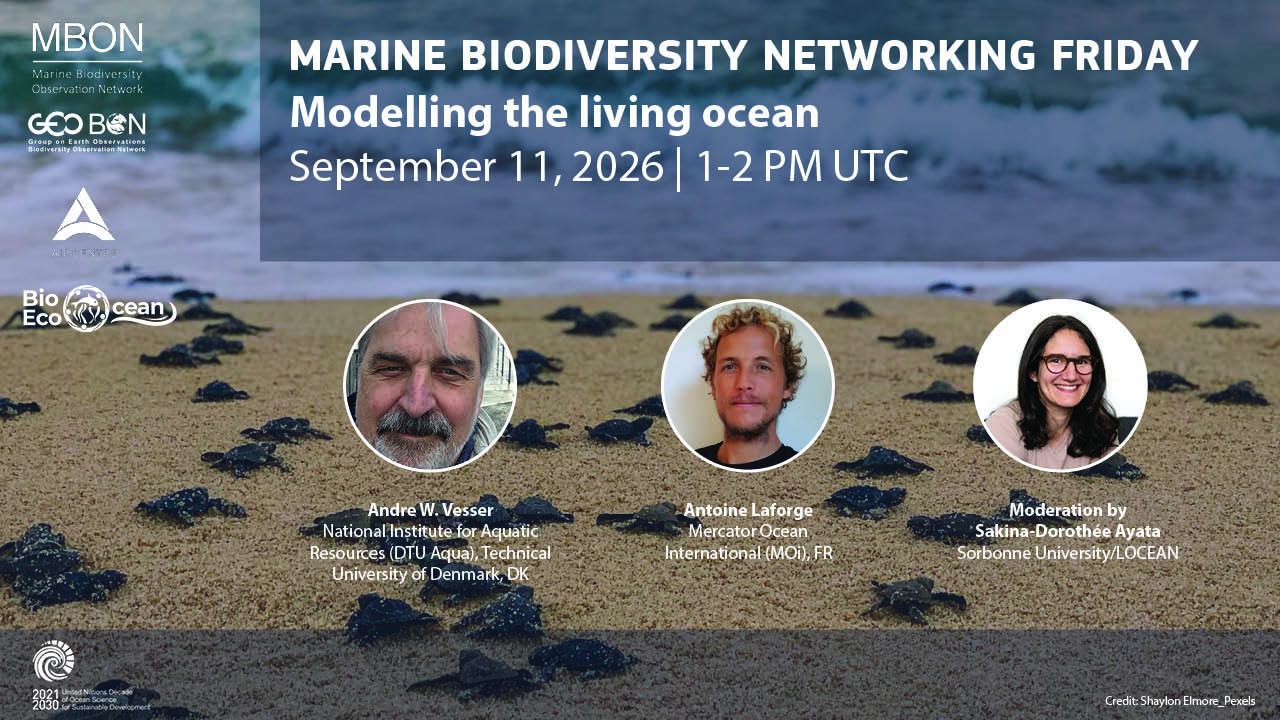
Sexta-feira da Rede de Biodiversidade Marinha: Modelização do oceano vivo
Data
September 11, 2026, 1:00 PM - 2:00 PM UTC
AIR Centre Networking Fridays
Mais informações sobre a série de Webinars aquiVer a Gravação
Ver no YouTube ↗De que forma a modelação de ecossistemas pode ajudar a compreender e a prever as alterações no oceano? Esta sessão reúne duas perspetivas complementares do projeto BioEcoOcean, financiado pela UE, explorando a forma como os modelos de ecossistemas marinhos podem interligar processos biológicos em diferentes escalas e melhorar a nossa compreensão das alterações no oceano.
Andre Visser analisa a bomba biológica de carbono e a diversidade funcional, utilizando uma abordagem de modelação baseada em características para investigar como as alterações globais podem afetar o funcionamento dos ecossistemas marinhos, com especial destaque para as alterações nas comunidades de fitoplâncton nos mares de alta latitude. Aborda ainda o desafio de integrar estes conhecimentos ecológicos nos Modelos do Sistema Terrestre.
Antoine Laforge percorre a rede alimentar pelágica, desde a produção primária e o zooplâncton até ao micronecton e às tartarugas marinhas. Ao combinar informação oceanográfica com modelos baseados em ecossistemas e em indivíduos, demonstra como a modelação pode ligar os processos dos níveis tróficos inferiores ao movimento e à dispersão dos animais marinhos, ao mesmo tempo que destaca perspetivas futuras e fontes de incerteza.
Em conjunto, as palestras mostram a amplitude da modelação do BioEcoOcean, ilustrando como diferentes abordagens de modelação podem ajudar a revelar as ligações entre a física oceânica, o funcionamento dos ecossistemas, o ciclo do carbono e a biodiversidade marinha — e como estas ferramentas podem contribuir para uma compreensão mais integrada de um oceano em mudança.
Este webinar é coorganizado pela Rede de Observação da Biodiversidade Marinha (MBON), pelo Centro Internacional de Investigação do Atlântico (AIR Centre) e pelo projeto BioEcoOcean, financiado pela UE (Acordo de Subvenção n.º 101136748).
Programa · UTC
Oradores
Andre W. Visser
Professor, National Institute for Aquatic Resources (DTU Aqua), Technical University of Denmark, DK
Andre Visser is professor of physical oceanography at DTU and works extensively at the interface between the physics and biology of the oceans. Over a 30-year career, he has worked on topics ranging from turbulence and shelf-sea dynamics to vertical migration and trait-based ecology, often developing mathematical models to describe the various processes involved. In recent years he has focused on the biological carbon pump, its role in the global carbon cycle and its potential to mitigate climate change.
Antoine Laforge
Marine Ecosystem Research Engineer, Mercator Ocean International (MOi), FR
Antoine Laforge is a marine ecosystem research engineer at Mercator Ocean International, with a background in Earth observation and computer science from ISEA-Supaero. He began his career working four years in altimetry applied to sea ice thickness estimation, before transitioning to marine ecosystem modelling — specializing in sea turtle movement, open-ocean navigation, demographic studies, and spatial ecology. He now focuses on improving sea turtle habitat modelling by refining the prediction and distribution of gelatinous organisms.
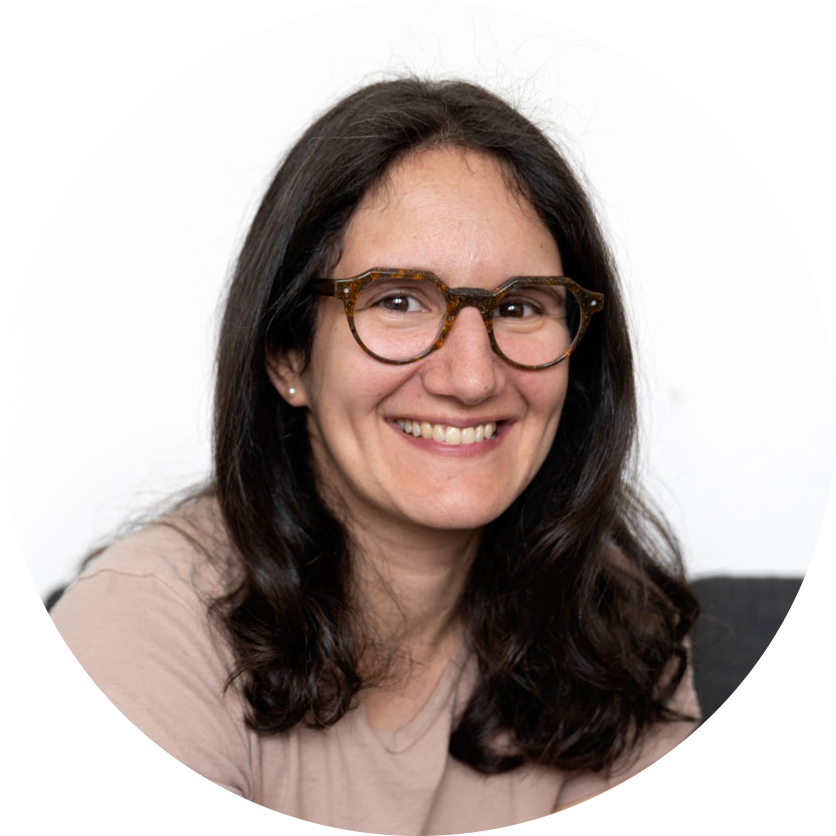
Sakina‑Dorothée Ayata
Associate Professor, Sorbonne University/LOCEAN
Sakina‑Dorothée Ayata is an associate professor (maîtresse de conférences, HDR) in marine ecology at Sorbonne Université, based at the LOCEAN laboratory in Paris. A marine ecologist and numerical oceanographer, she works at the interface between the observation and modelling of ocean life. Trained in biology, ecology and computer science at the École normale supérieure in Paris, she has studied the larval dispersal and connectivity of marine invertebrates and the effects of phytoplankton stoichiometry and photoacclimation on ocean primary production, combining biophysical modelling, in situ observation and statistical analysis. Since 2020 she has co‑led the FORMAL project‑team (From Observing to Modelling Ocean Life) at Sorbonne Université's Institute for Computational and Data Sciences, and her work has recently expanded to genomics and next‑generation sequencing for plankton.