Networking Fridays
Networking Friday Special Session on Space Capacity Building
Data
September 25, 2020, 1:00 PM - 3:00 PM UTC
AIR Centre Networking Fridays
Mais informações sobre a série de Webinars aquiVer a Gravação
Ver no YouTube ↗On September 25, 1-3 PM UTC, we held a Thematic Special Session on Space Capacity Building with Stefano Ferretti (ESA), Shubha Sathyendranath (Plymouth Marine Laboratory), and Antonio Martelo (DLR). The session focused on Space Capacity Building to empower the international community towards fully accessing all the economic and societal benefits that space assets and data can offer. New innovation models are increasingly spreading across various sectors and disciplines, including space, which is becoming an integral part of many societal activities (e.g. telecoms, weather, climate change and environmental monitoring, civil protection, infrastructures, transportation and navigation, healthcare and education). The session helped participants to construct their own space capacity building roadmaps, which take into account key stakeholders and also new private actors, NGOs and civil society. Starting from a policy and strategy perspective, the session addressed key aspects of capacity building, including innovation and exploration, global health, climate change and resilient societies. It outlined the available options and summarized the ideal programmatic conditions for their successful implementation. Showcasing reflections from a range of senior space professionals around the world, with their unique perspectives and solutions, the session provided a rich mosaic in which various cultural and policy approaches to space are translated into actionable programs and ideas so that space may truly benefit all of humankind.
Agenda:
- 1:00 PM UTC - Welcome address and introductions
- 1:10 PM UTC - Stefano Ferretti
- 1:40 PM UTC - Shubha Sathyendranath
- 2:10 PM UTC - Antonio Martelo
- 2:40 PM UTC - Q&A Session
- 2:55 PM UTC - Closing remarks
Speakers
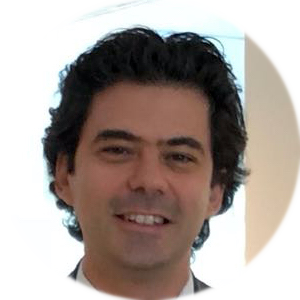
Stefano Ferretti
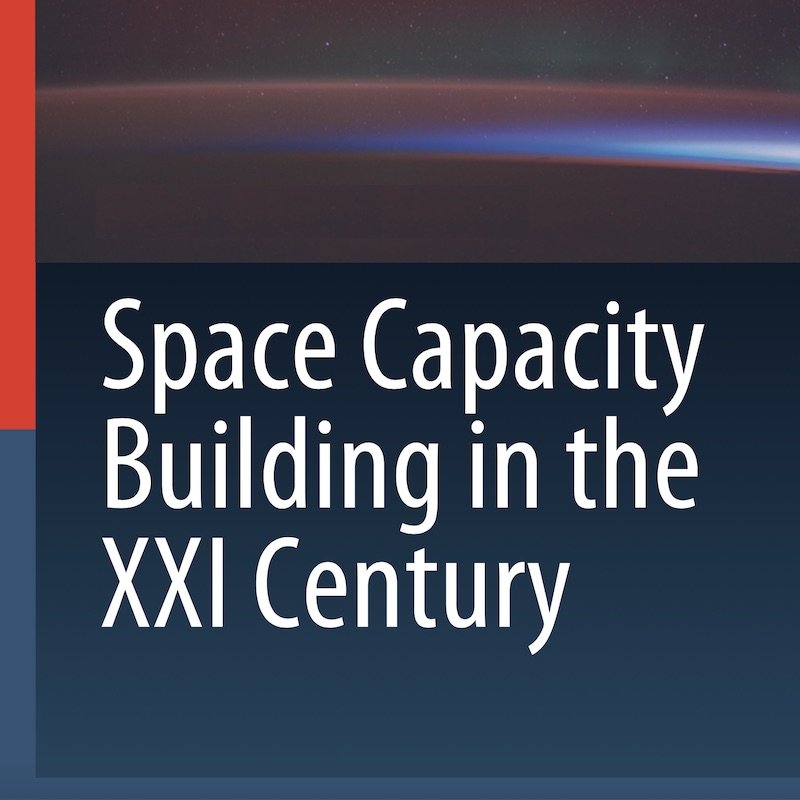
Space Capacity Building in the XXI Century
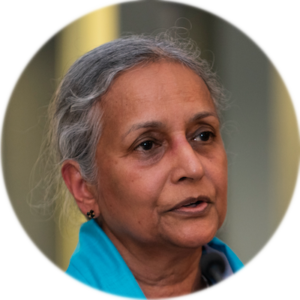
Shubha Sathyendranath
Building capacity and resilience against diseases transmitted via water under climate perturbations and extreme weather stress It is now generally accepted that climate variability and change; occurrences of extreme weather events; urbanisation and human pressures on the environment; and high mobility of human populations; all contribute to the spread of pathogens and to outbreaks of water-borne and vector-borne diseases such as cholera and malaria. The threats are heightened by natural disasters such as floods, droughts, earthquakes that disrupt sanitation facilities. Aligned against these risks are the laudable Sustainable Development Goals of the United Nations dealing with health, climate, life below water, and reduced inequalities. Rising to the challenges posed by these goals requires an integrated approach bringing together various scientific disciplines that deal with parts of the problem, and also the various stakeholders including the populations at risk, local governing bodies, health workers, medical professionals, international organisations, charities, and non-governmental organisations. Satellite-based instruments capable of monitoring various properties of the aquatic ecosystems and the environs have important contributions to make in this context. In this talk, we present some examples to illustrate some of the benefits that remote sensing can bring to address the problem of global of health, and use these examples to identify the capacity building that is essential to maximise the exploitation of the remote sensing potential in this context. Shubha Sathyendranath is an oceanographer from India (Cochin University of Science and Technology), with a doctorate from France (Université Pierre et Marie Curie, Paris), who has worked in India, France and Canada before moving to the Plymouth Marine Laboratory in the UK. Her main interests are marine optics; remote sensing; marine primary production; biological-physical interactions in the ocean; climate variability; and climate change. She is currently the science lead of the Ocean Colour Climate Change Initiative of the European Space Agency. She worked for many years as the Executive Director of the Partnership of Observation of the Global Oceans, devoting her time there to improving international coordination and collaboration, as well as capacity building for ocean observations. Most of her research work has had an open-ocean focus. Her interest in issues of ecosystem health in coastal and inland water bodies was stimulated by learning about the degradation of the water quality of Vembanad Lake in Kerala, India, and its implications for human health.
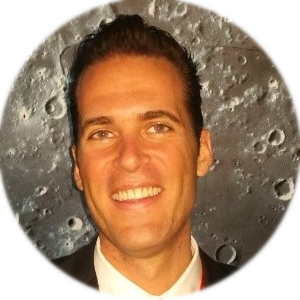
Antonio Martelo
Innovative Space Systems Design—Methods and Tools Antonio Martelo is the head of the Concurrent Engineering Facility (CEF) and a space systems engineer in the German Aerospace Center (DLR), since 2014. His present work focuses on Concurrent Engineering-study operation as team leader, Concurrent Engineering process development, the responsibility for the CEF, and the acquisition and execution of projects and studies, as well as the dissemination of results and external communication. He holds degrees in Telecommunications Engineering from the European University of Madrid (Spain), Space Systems Engineering from ISAE-Supaero (France), and in Radio-astronomy and Space Science from Chalmers University of Technology (Sweden).
Oradores
Stefano Ferretti
Antonio Martelo